As restorative justice becomes more widely used, a basic question comes up more often. Where do these ideas come from, and what does it mean to use them responsibly?
Though restorative justice draws from a range of influences, many of its values are rooted in Indigenous legal traditions around the world, like healing, accountability, community involvement, and relationship-building. These are long-standing systems of justice that centre relationships, collective responsibility, and balance within a community.
At the same time, restorative justice and Indigenous justice are not the same. Indigenous legal orders are grounded in specific cultures, traditions, and worldviews. They cannot be reduced to a set of techniques or applied as a universal model.
This is where conversations about decolonizing restorative justice often begin. It is easy to say that restorative justice should be more attentive to its roots. It is harder to define what that looks like in practice.
One place to start is with how programs are designed and who is leading them. When restorative justice initiatives are introduced into Indigenous communities without meaningful consultation or leadership, they can reproduce the same power dynamics they aim to challenge. Programs that apply the same restorative model across different communities, without incorporating local teachings or cultural practices, may not reflect the needs or values of the people they are meant to serve.
In contrast, some approaches in Canada are Indigenous-led and community-driven. For example, the CHCH program in Hollow Water, Manitoba, combines Indigenous teachings, ceremonies, and restorative processes to address intergenerational trauma and support community healing, while restorative circles in Cree and Métis communities in Saskatchewan are guided by Elders and rooted in local traditions (see Restorative Justice in Canada: An Introduction to Theory and Practice for more about these). In these contexts, restorative processes are shaped by local teachings, guided by Elders, and connected to cultural practices. Rather than being applied to a community, they are developed within it.
For practitioners and students, these distinctions raise practical questions. Who is leading the process? How are community members involved? Are programs flexible enough to reflect different cultural contexts, or are they applying the same model in every setting?
As Restorative Justice in Canada: An Introduction to Theory and Practice explains, “To work respectfully and effectively within Indigenous communities, restorative justice must take on the role of follower rather than leader.” The text explores these ideas in more detail, with attention to both the development of restorative justice and its relationship to Indigenous justice in Canada.
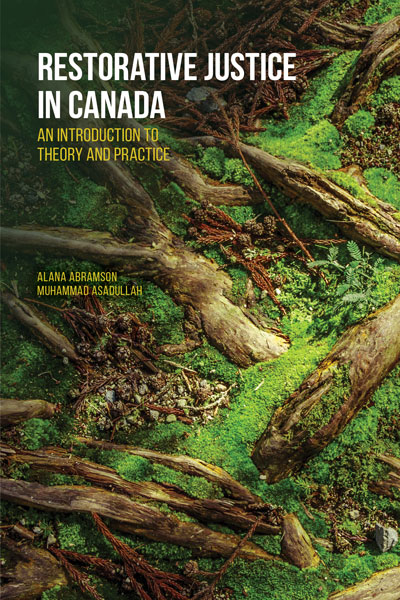 Restorative Justice in Canada: An Introduction to Theory and Practice is available for purchase.
Order Your Copy Today!
Show Me More!