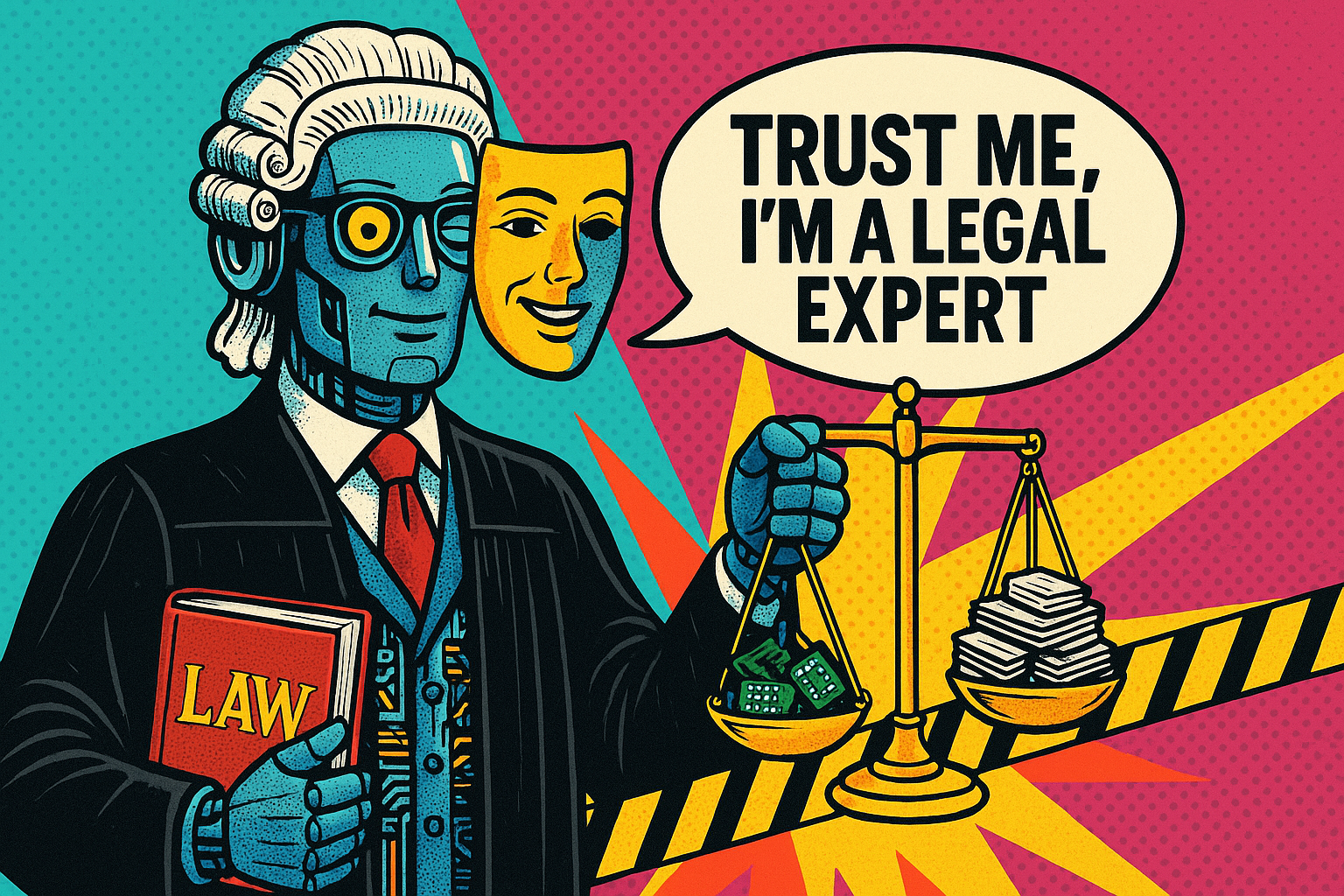
Artificial intelligence has quickly become a go-to tool for law students and licensing candidates (and many lawyers, too). With just a few keystrokes, AI tools can produce confident, polished responses to legal questions that look like they came from an expert. It’s no surprise, then, that many licensing candidates begin to believe: “Why spend money on courses or so much time studying? I can just ask AI to explain things to me like it’s a legal expert.”
But here’s the truth: AI is not a legal expert. Treating AI like one can leave you with gaps in your understanding and application that will cost you on the licensing exams.
Why This Misconception Feels True
There are many reasons why it’s so easy to think of AI as a legal expert:
-
Authoritative tone – AI often presents information in a way that sounds confident and precise. It sounds particularly authoritative to us when we are new to a legal concept, legal decision, or legislation. Because AI makes it seem easy, we incorrectly equate this with expertise.
-
Speed and convenience – AI can summarize statutes or cases in seconds, something that normally takes us hours. As a result of AI doing this so quickly, we mistakenly associate this with expertise forgetting that this is a machine-based tool using millions of bits of data working at digital speeds.
-
Marketing and hype – Tools are promoted as “smart study companions,” which makes it tempting to treat them like professors or tutors. Because we equate professors and tutors with being experts on law, we think the same of AI.
On the surface, it feels like AI has the knowledge and authority of a real expert. But what it actually has is predictive power, and that’s not the same thing.
The Reality
AI doesn’t “know” the law. It works by predicting text based on patterns in the data it was trained on. This means:
-
We need to appreciate that AI takes information from dozens, hundreds or thousands of articles, decisions, guidelines, and other information sources and simply recomposes this information quickly.
-
The messages promoting these tools leave out information on AI’s limitations, inabilities, and challenges leaving us to believe that everything it produces is perfect because of its expertise. AI has significant limitations. AI as an expert is a fallacy.
-
AI doesn’t understand context or nuance, the two things at the heart of legal reasoning. The key to critical thinking is an ability to think organically, contemplate variation, and understand subtleties. This is what experts do, not AI.
-
AI can “hallucinate,” generating confident but completely wrong answers. AI will fabricate facts, legal arguments, even caselaw to provide answers that satisfy the expectations and instructions of users. We’ve all seen the articles about this.
-
AI may provide outdated or incomplete information if the law has changed since its training data. Experts ensure they are current and knowledgeable about new law so they are always and, in fact, are often behind new law.
An exam answer that sounds right but is legally wrong won’t earn you points. That’s the risk of relying on AI as if it were an expert.
Why Human Expertise Matters
Legal education isn’t just about memorizing rules, processes, and tests, it’s about learning to reason through problems. Human experts, like professors, practicing lawyers, and subject-matter specialists, bring something AI cannot:
-
Contextual guidance – They understand the expectations of the exams and how to prepare for them effectively. This is based on experiential knowledge, sophisticated understanding of topics, and engagement with applicants and the process over many years. These are all things AI cannot gain by reviewing documents.
This is why expert-developed resources are essential: they don’t just present information; they help you develop the skills to apply it under exam conditions.
How to Use AI Effectively (Without Treating It as an Expert)
AI can still have a place in your study plan, but only as a support tool, never as your main source of learning. For example:
But remember to always verify what you get from AI against authoritative sources like the syllabi, textbooks, court decisions, and expert-created study resources.
Conclusion
AI is not a legal expert. It can help you with quick summaries and simple explanations, but it cannot provide the depth, reliability, or reasoning required to succeed on licensing or challenge exams. That’s where structured, expert-developed prep materials come in.
If you’re preparing for the accreditation or licensing process, trust the resources designed by real legal experts who know the exams, understand the expectations, and can help you build true legal reasoning skills. That’s the path to confidence and success.