When you’re preparing for a high-stakes bar or paralegal licensing exam, practice exams are one of the most valuable study tools you can have. They let you measure progress, identify weak spots, and practice applying the law under exam conditions using critical thinking skills.
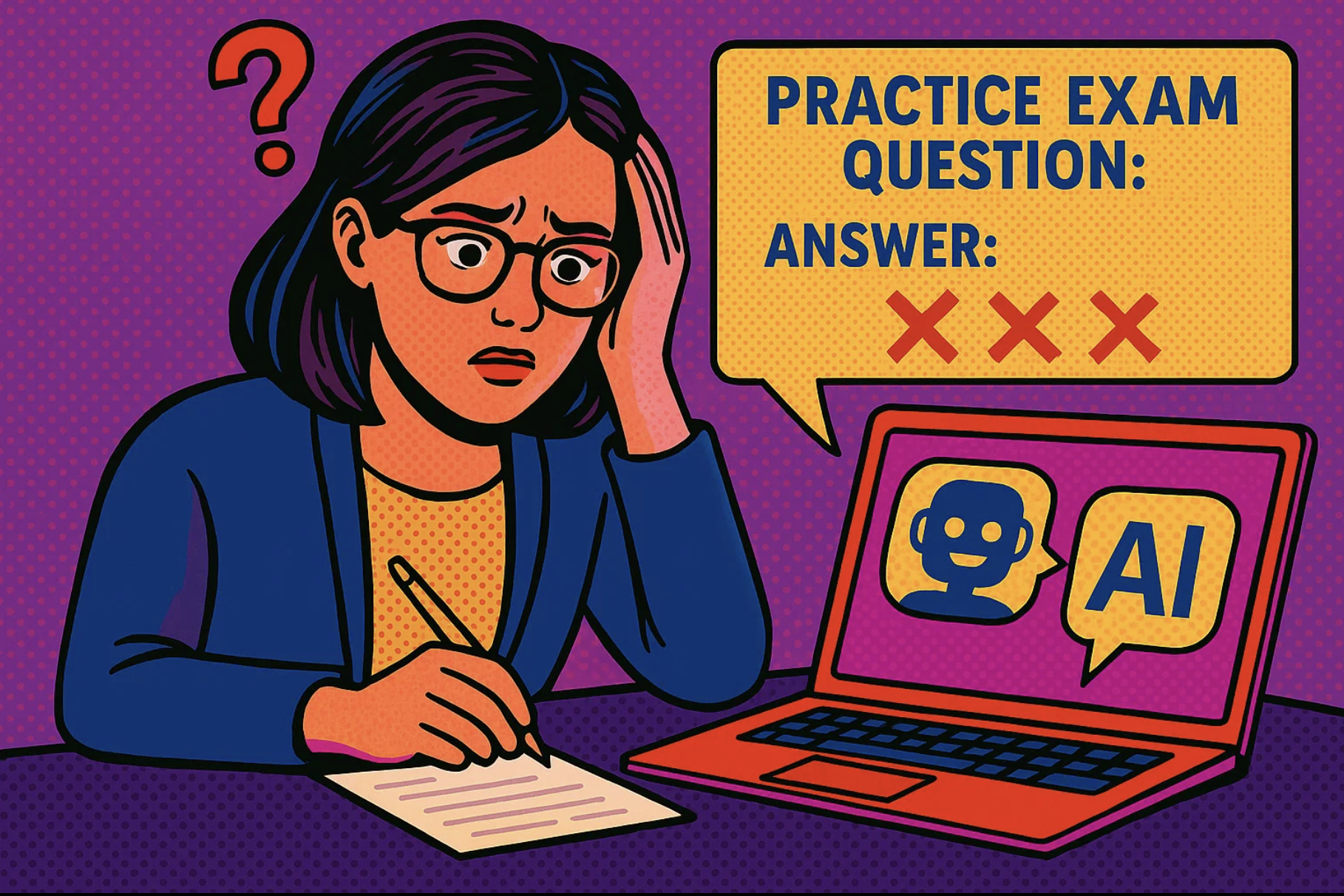
But a common misconception is creeping in: with the rise of tools like ChatGPT, some candidates believe they can simply ask AI to generate practice exam questions and rely on those instead of using professional, subject matter expert-created practice exams.
It sounds appealing. AI is fast, cheap, and seemingly personalized. But here’s the reality: AI-generated practice exams are not the same thing as carefully designed, high-quality practice materials. And confusing the two can seriously harm your preparation and ultimately your exam performance.
Why This Misconception Feels True
At first glance, AI looks like it can deliver everything you need for practice exams:
For candidates, this can all seem like a quick win. Why pay for practice exams when you can “make” your own in seconds using AI? It looks the same. It generates tough questions. And lots of the questions reflect what you know or learned at school or from the study materials, so they appear to be exactly what you need. But the truth is, AI is generating content based on patterns in its training data and not on the actual standards of your licensing exams. That distinction matters.
Where AI Practice Exams Fall Short
The gaps between AI-generated practice exams and real ones are significant, and they directly impact your preparation:
-
Accuracy and Reliability
AI sometimes produces plausible-sounding but incorrect rules, fact patterns, or answer choices. If you don’t already know the material well, you may end up reinforcing errors instead of correcting them. The worst part is you probably won’t recognize when this is happening.
-
Alignment with Exam Standards
Licensing exams are designed with strict blueprints, weighting, and learning objectives. AI does not have access to those designs. It cannot guarantee that its questions mirror the level of difficulty, scope, or focus you’ll face on exam day.
-
Quality and Nuance of Explanations
A strong practice exam doesn’t just tell you the right answer. It explains why an answer is correct and why others are not. AI explanations often lack this nuance, which means you lose out on one of the most valuable parts of practice. This means that you do not get to the level of understanding that you need and does not help you strengthen your critical thinking skills.
-
Consistency Across a Set
Good practice exams are curated so that the collection of questions tests you across topics, levels of difficulty, and skills. AI-generated questions are one-off, without balance or progression, leaving big gaps in coverage. And, as with the issue of accuracy and reliability, if you do not already know the materials, you will not recognize this.
What Real Practice Exams Do Differently
Professionally developed practice exams, like those at Emond Exam Prep, are not just random questions thrown together. They are:
-
Accompanied by detailed explanations, designed to teach you how to think through questions, spot traps, and improve your reasoning, leading to greater success.
In short, professional practice exams are a study tool built to sharpen your ability to perform under pressure. AI simply can’t replicate that. These practice exams are written to reflect the skills, knowledge, and thinking that regulators, like the LSO, are looking for. This is done through an understanding of why regulators are looking for licensing candidates to demonstrate these skills, knowledge, and thinking. This cannot be replicated by AI.
Why This Matters for Your Success
Licensing exams are high stakes. You don’t get many attempts, and the consequences of failure can delay your career and cost you significant amounts of money. Cutting corners with AI-generated practice exams is a risky gamble.
By contrast, investing in professional practice exams gives you confidence that:
That’s why Emond Exam Prep designs practice exams the way we do: to replicate real exam conditions, reinforce learning, and build the reasoning skills you’ll need not just to pass, but to succeed as a professional.
Final Takeaway: Don’t Confuse Speed with Strategy
Yes, AI can give you something that looks like a practice exam. But “looking like” is not the same as “working like.” AI saves time, but it doesn’t build judgment. It generates text, but it doesn’t design learning.
If you want to enter your licensing exam confident, prepared, and exam-ready, trust professional practice exams created by experts who understand the process. AI can help along the way, but it can’t replace the tools that truly get you across the finish line.