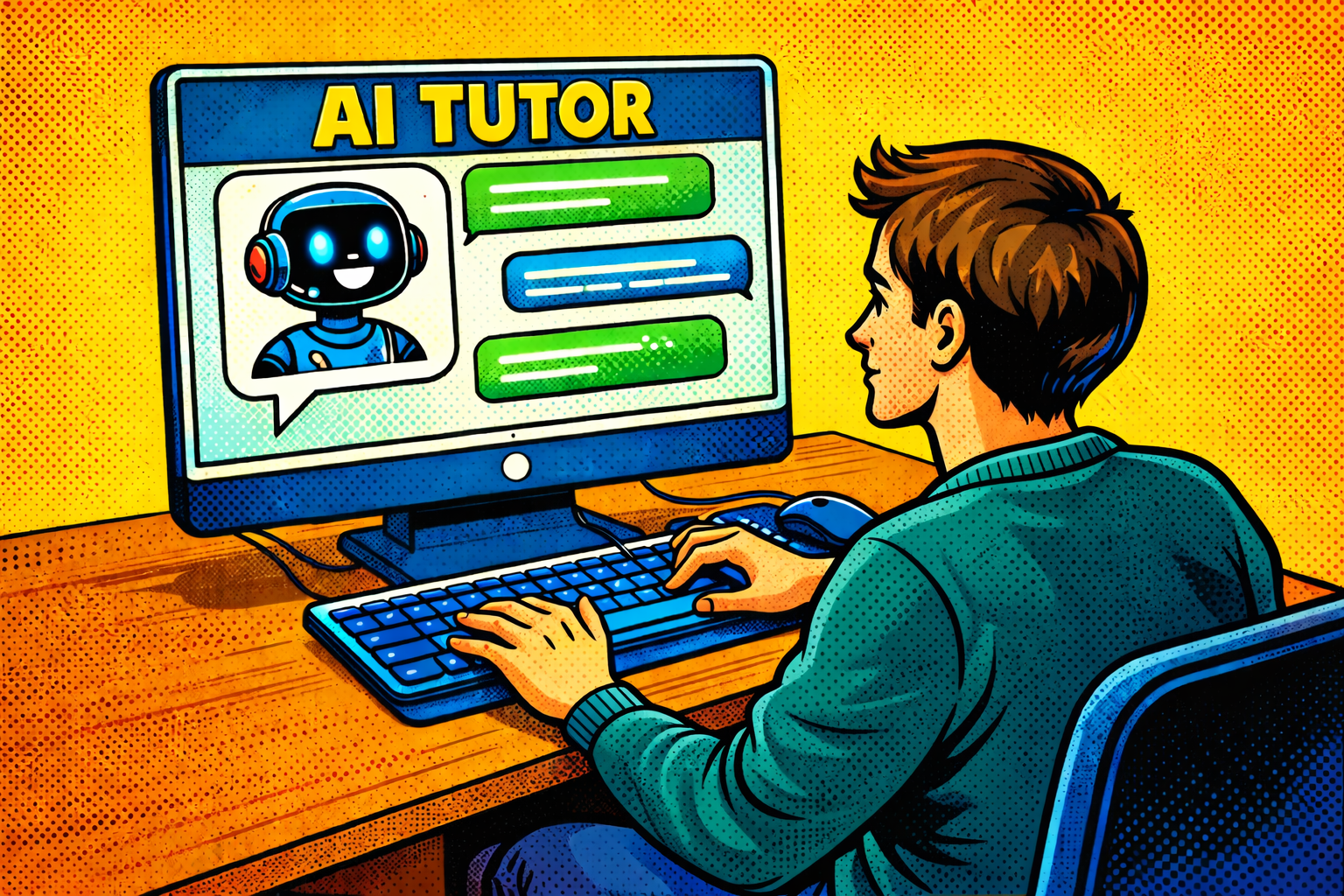
I recently reviewed an unpublished survey of law and paralegal students asking what they think about AI, their use of AI, and what they hope AI will do for them in the next few years. The results of this survey reinforced the need for information addressing ongoing and significant misconceptions about what AI can do and how it can make bar and paralegal candidates ready for licensing exams. A particular concern arising from this survey was that many respondents indicated that within the next three to five years, they believe AI will deliver real-time tutoring and provide highly personalized feedback, effectively functioning as an always-available, completely individualized learning coach.
For candidates already relying on generative AI tools to explain confusing concepts, summarize cases, or create practice questions, this expectation may feel like a natural next step. If AI can clarify a rule in seconds or help outline an argument, why wouldn’t it soon be able to guide your learning in a deep, individualized way providing you with the specific and immediate guidance you need and in a personalized way that works with your specific learning style and needs?
But while this vision is appealing, it represents a significant misconception about the current trajectory of educational AI technology and what it is actually capable of.
Why People Believe This
To understand why this misconception is so widespread, it helps to consider what learners are already experiencing. Over the past year, AI tools have become noticeably more capable at:
-
producing accurate case summaries
-
generating quizzes and self-assessment questions
-
breaking down complex legal concepts
-
giving surface-level comments on clarity, structure, or organization
These abilities create the impression that AI not only understands the material but also can understand you, your learning style, your weaknesses, and your objectives. When learners see how AI generates content (using its system to predict and tailor learning to you), it's easy to assume that meaningful assessment is happening.
But this is where the distinction becomes crucial: customized content is not the same as personalized instruction. Generating materials that are tailored to a prompt is fundamentally different from diagnosing the reasoning behind a learner’s mistake or responding to patterns in their learning over time by identifying issues, errors, and misunderstandings independent of prompts from the learner.
Where the Misconception Breaks Down
Human tutors don’t just give information; they interpret signals. They listen for hesitation, notice inconsistencies, and ask clarifying questions that reveal the underlying issue. They adapt explanations not simply based on the question, but on the person asking it.
For AI to function as a true real-time tutor, especially in a nuanced and complex subject like law, it would need to reliably perform several abilities that current systems still struggle with:
1. Diagnosing reasoning errors
A human instructor can tell when you misunderstood a case, misapplied a legal test, or missed a key element in an analysis. Current AI models, by contrast, often provide feedback that is too generic, occasionally incorrect, or misaligned with the learner’s actual misunderstanding. They see the output but lack the cognitive framework that allows humans to interpret why the error happened.
2. Modeling an individual learner
Effective tutoring involves knowing what you know, and what you don’t. AI tools don’t yet maintain a stable mental model of a learner’s strengths, gaps, or progression. Even in tools that claim “memory,” the personalized profile tends to be flimsy, inconsistent, and easily disrupted by changes in context.
3. Adapting instructional strategies
Good tutors don’t teach everyone the same way. They shift between examples, analogies, levels of detail, tone, pacing, and questioning techniques suited for the individual learner. AI can adapt “within the moment” based on instructions, but it does not autonomously manage long-term instructional strategy, which is a key part of genuine personalization.
4. Ensuring accuracy and reliability
The law is interpretive and context dependent. A single misstatement can impact a learner’s understanding. Though AI is improving rapidly, hallucinations, oversimplification, and subtle analytical errors still appear too often for AI to function confidently as a real-time instructor.
Combined, these limitations show why real AI tutoring is not available now nor around the corner.
What AI Can Do Today
This doesn’t mean the technology isn’t helpful. On the contrary, AI has already become a meaningful supplement to learning. Today’s tools can:
-
help break down readings into digestible summaries
-
offer quick examples
-
generate simple practice questions
-
provide insight on some concepts
-
assist with outlining or brainstorming
Used intentionally, these capabilities can improve study efficiency, offer new perspectives, and reduce the mental workload required for dense legal texts. They just aren’t a substitute for teaching expertise and won’t be for a long time.
Where This Technology Is Really Headed
AI researchers are making steady progress toward systems that better understand learners. But achieving true personalization requires major advances in:
These are not incremental upgrades. They are foundational challenges that require entirely new approaches to AI design. For this reason, the belief that we will have deeply personalized, real-time AI tutoring and personalized learning within three to five years is overly optimistic.
The more realistic path is that AI will continue to evolve as a helpful study companion, providing explanations, generating examples, and supporting practice while human educators remain essential for the deeper, judgment-driven aspects of learning.
The Takeaway
AI is transforming legal education, but not always in the ways people assume. While the dream of a personalized, real-time AI tutor is appealing, it remains technologically distant. Today, the most effective approach is to use AI as a tool to thoughtfully and strategically compliment real intelligence.